10 Reasons Restaurants Are Switching to Bamboo Disposable Plates
A Viable Alternative to Paper and Plastic?
A Viable Alternative to Paper and Plastic?
Restaurants, caterers, and food trucks are constantly looking for ways to serve food beautifully without adding extra work or cost to daily operations. That search has led many foodservice businesses toward bamboo disposable plates, a category that has quietly moved from niche eco-product to mainstream restaurant staple. Sturdy, natural-looking, and genuinely practical, these plates are changing how operators think about single-use tableware. Here's why so many restaurants are making the switch in 2026, and what to consider before stocking up.
Bamboo plates disposable in nature are made from pressed bamboo fibers rather than paper pulp or petroleum-based plastic. Bamboo is one of the fastest-growing plants on earth, which makes it a renewable material that regenerates quickly after harvesting. Once pressed and shaped, bamboo tableware takes on a smooth, slightly textured finish that looks closer to natural wood than typical disposables. Restaurants exploring options can browse a full range of bamboo plates disposable styles suited to different menu types and event sizes.
Unlike thin paper plates that buckle under gravies, sauces, or oily foods, bamboo holds its shape. Its dense fiber structure resists moisture far longer than paper, which matters for kitchens serving hearty entrées or catered buffets.
Many bamboo disposable plates are certified for commercial composting and will also break down in home compost systems. For restaurants working toward waste-reduction goals, this is an easy operational win with a visible sustainability story.
Plastic-coated paper plates can shed microplastics as they break down. Bamboo plates skip the plastic lining entirely, which appeals to health-conscious diners and businesses trying to reduce their environmental footprint.
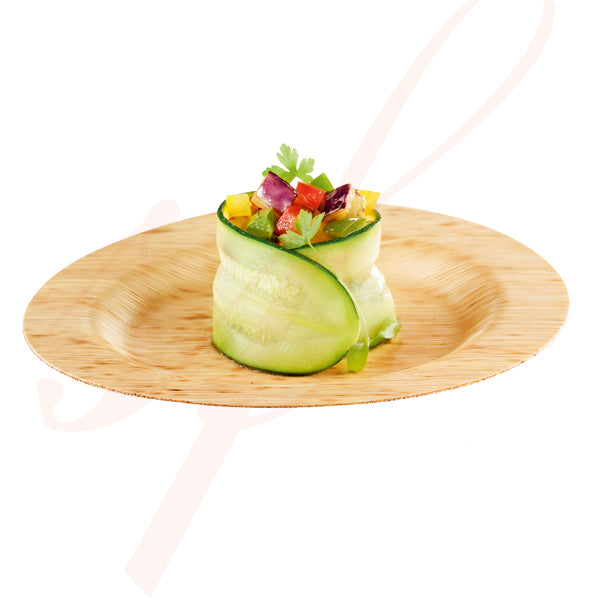
The natural sheen of bamboo tableware looks more upscale than standard paper or foam options. Many guests don't immediately realize the plate is disposable, which helps maintain a polished dining experience even during high-volume service.
Bamboo has one of the highest strength-to-weight ratios of any natural material. Servers can carry stacked plates easily without sacrificing the durability needed for a full plate of food.
While the per-unit price can run slightly higher than basic paper plates, bamboo's durability often reduces waste from breakage or double-plating, making it a smarter long-term choice for busy kitchens.
From casual take-out counters to catered weddings, bamboo tableware adapts well. Restaurants handling private events or off-site catering can pair plates with matching servingware from a dedicated bamboo catering supplies collection for a cohesive table setup.
Bamboo doesn't warp under hot food the way thinner paper products can, and it holds up well for cold items like salads or desserts, giving kitchens one plate option for multiple menu categories.
As more diners and corporate clients ask about sourcing and packaging, having a compostable, plant-based plate on hand helps restaurants answer those questions with confidence and back up marketing claims with real materials.
Presentation shapes how customers judge food quality before they even take a bite. Swapping in bamboo tableware signals attention to detail and environmental responsibility, both of which resonate with today's diners.
Not all bamboo tableware is built the same. Restaurants should consider plate thickness for heavier dishes, shape and size for portion consistency, and whether square or round styles better match their existing table settings. Buyers stocking up for regular service or large events can compare full case options within the bamboo disposable plates collection to find the right fit for volume and budget.
Compared to plastic, bamboo skips petroleum-based materials and microplastic concerns entirely. Compared to standard paper plates, it offers noticeably better strength and moisture resistance. For restaurants already evaluating sustainable packaging across their operation, it's worth reading more about eco-friendly food containers to see how bamboo fits alongside other plant-based options for take-out and dine-in service.
Bamboo disposable plates give restaurants a practical way to combine durability, presentation, and sustainability without overhauling their entire supply chain. As more operators look for tableware that performs well under real kitchen conditions while supporting eco-conscious goals, bamboo has become a natural fit rather than a passing trend. Restaurants ready to explore options can browse the full catalog at Sweet Flavor and find the right products for their menu and volume needs.
Bamboo disposable plates handle warm foods well, but manufacturers generally recommend avoiding microwave use since prolonged heat exposure can weaken the natural fibers over repeated use.
Yes, bamboo disposable plates can often be reused two to three times with light rinsing between uses, making them more economical than standard single-use paper alternatives.
Most bamboo disposable plates are certified compostable and fully biodegradable, breaking down naturally in commercial composting facilities or home compost bins within a few short months.
Bamboo disposable plates are sturdier, more leak-resistant, and less prone to sogginess than paper plates, making them better suited for heavier, saucier restaurant menu food items.
Bamboo disposable plates work well for weddings, catering, and large events since they combine an elegant look with durability, keeping table presentation polished without extra cleanup.